Every homeowner wants a beautiful front entrance that adds value, character, and curb appeal to
their home. In metro Atlanta, however, maintaining a wood front door is more challenging than many
people realize. Georgia’s combination of intense UV exposure, high humidity, heavy rain, and
seasonal temperature changes gradually breaks down even high-quality exterior finishes.
When a front door begins to fade, peel, or crack, many homeowners immediately start requesting
estimates. Unfortunately, choosing the cheapest quote—or hiring a contractor who treats wood
refinishing like ordinary house painting—can lead to costly mistakes that permanently damage the
door.
Before requesting estimates or signing a contract, there are a few important things every
homeowner should understand. Knowing how your door is built and what type of finish it currently
has will help you ask better questions, compare estimates more accurately, and choose a
professional who can restore your investment instead of risking it.
How to Know If Your Door Actually Needs Refinishing
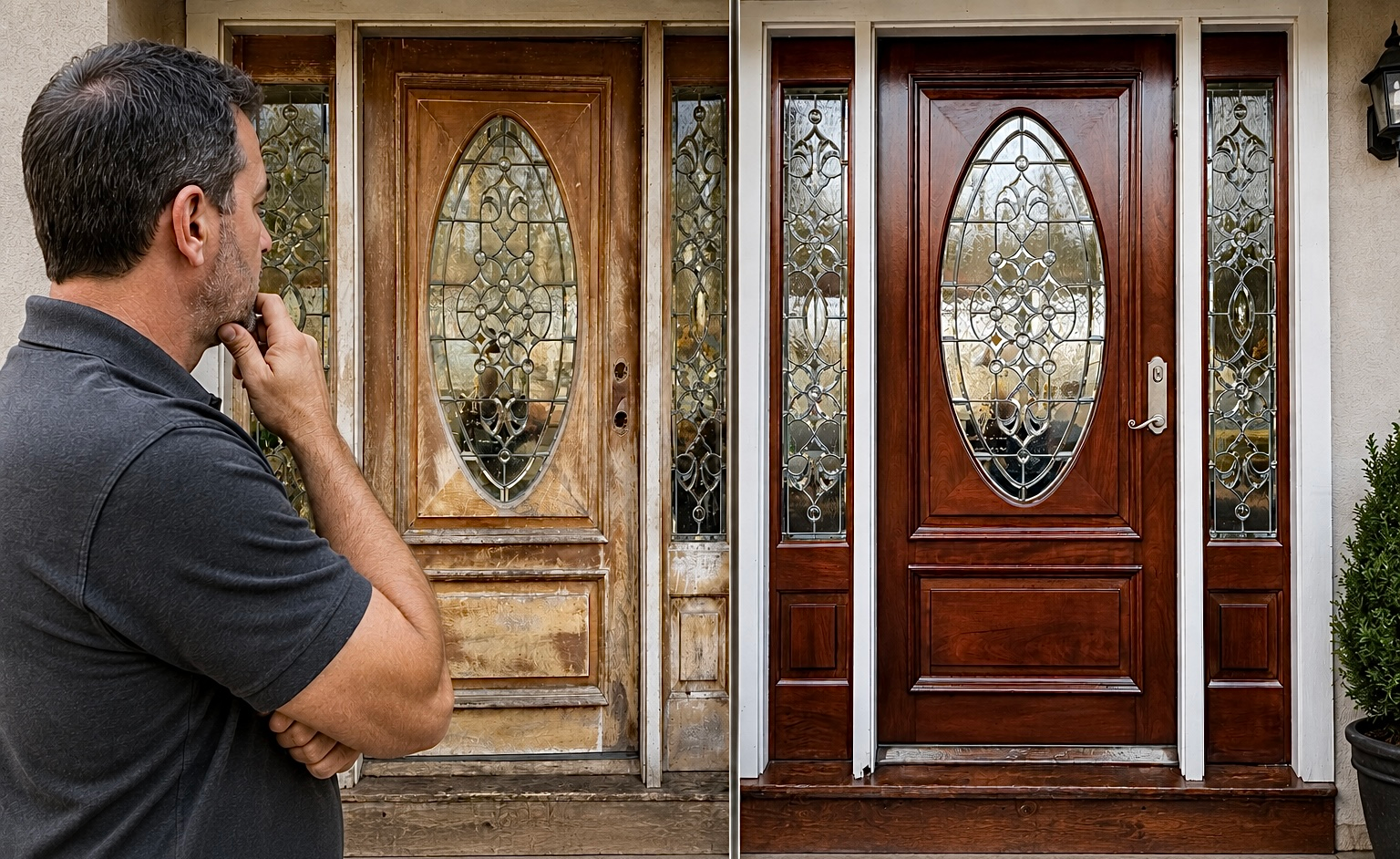
Before looking into technical details, take a close look at your entryway. If you notice any of the
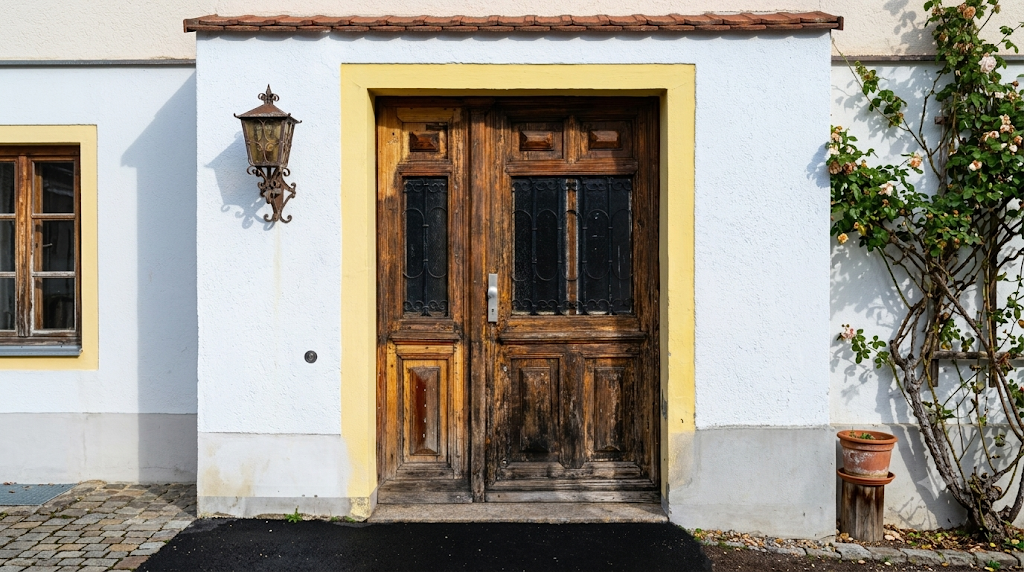
following five warning signs, it means the protective clear coat has failed, and your door is actively
exposed to weather damage:
Fading Color: The vibrant wood stain has turned dull, chalky, or uneven due to intense
sun exposure.
Peeling or Flaking Finish: The clear topcoat is literally lifting off the wood, leaving
bare spots unprotected.
Dry, Graying Wood: The wood looks thirsty and has started turning gray, which means
UV rays are damaging the natural fibers.
Dark Water Stains: You see black or dark brown spots, especially at the bottom of the
door or frame, showing that moisture is soaking into the wood.
Fine Cracks: Small hairline cracks are opening up in the wood grain or joints, which
will trap water and cause rot if ignored.
- Paint vs. Stain: What’s on Your Door Now (And What’s the Goal?)
The total cost and time required for your project depend entirely on what is currently on your door
and what you want it to look like at the end.
Scenario A: Turning a Painted Door Back into Natural Wood
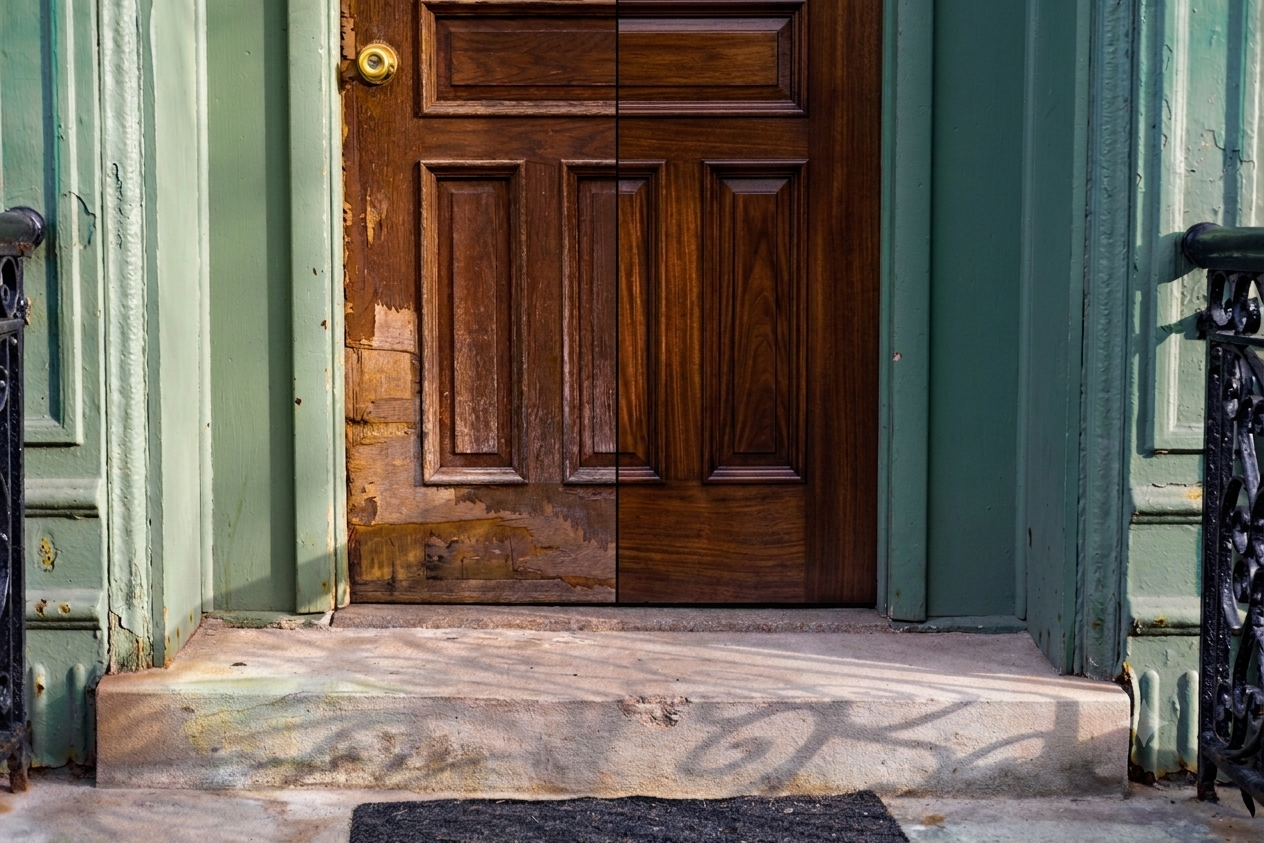
This is the most challenging and labor-intensive project in the industry. If a previous owner covered
your gorgeous wood door in layers of thick latex or oil paint, bringing back the natural wood grain
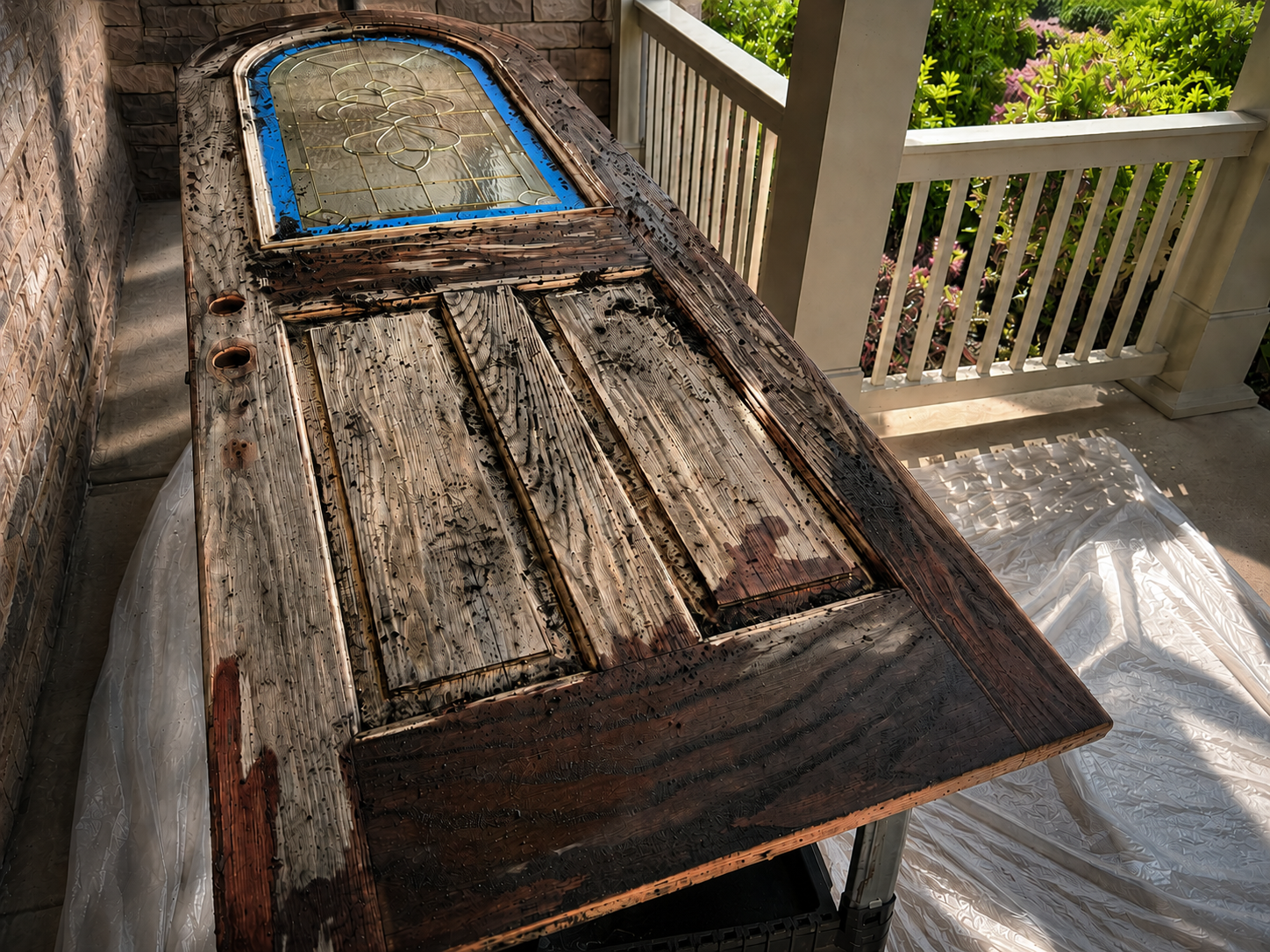
takes serious work. A professional crew will need to apply multiple rounds of heavy-duty chemical
strippers to safely melt away the paint layers without gouging the wood. After that, they have to
perform meticulous hand-sanding inside every single groove and decorative molding to ensure the
fresh wood can absorb a new stain evenly.
Scenario B: Refreshing an Existing Wood Stain
If your door is already stained and just needs to be restored, the process is much simpler. Instead of
removing everything down to the raw wood, a specialist usually only needs to remove the old,
degraded clear coat. This typically requires just one or two light applications of a chemical
neutralizer. Once the old clear coat is gone, they can clean the wood, touch up the color, and apply
fresh, marine-grade protective layers, saving you a lot of time and labor cost. - Is Your Door Solid Wood or Veneer? Why It Matters Before Refinishing
This is the single most important technical detail of your entire project. If a painter treats a veneer
door like a solid piece of wood, they can permanently destroy it in minutes.
Solid Hardwood Doors
A solid wood door is exactly what it sounds like—it is made of solid, heavy pieces of timber (like
Mahogany, Oak, or Walnut) from the front face all the way through the core. These doors are
incredibly durable. If a solid door has deep scratches, heavy water stains, or minor surface rot, a
restorer can safely sand it down deeply to reach fresh, healthy wood.
Engineered Veneer Doors
Many beautiful front doors in modern Atlanta homes are actually engineered veneer doors. This
means the inside core of the door is made of cheaper, compressed wood or pine, and it is covered
by a very thin layer of expensive hardwood (the veneer) glued on top. Based on our hands-on field
experience across metro Atlanta neighborhoods, nearly 60% of modern luxury subdivision
entryways utilize engineered veneer rather than solid timber.
Refinishing a veneer door requires immense caution and specialized skills. Because the decorative
wood layer on the outside is often less than a sixteenth of an inch thick, aggressive machine
sanding will completely grind right through it. Once you sand through a veneer, you expose the ugly
core wood underneath, and the door is essentially ruined and must be replaced. A true professional
will always inspect the edges of your door first to check for a veneer and will use gentle handsanding methods to protect it. - How This Knowledge Helps You Get a Better Estimate
Now that you know the difference between paint and stain, and solid wood versus veneer, you hold
all the cards. You don’t need to be an expert to use this to your advantage.
When you call local companies for an estimate, don’t just say, “I need my door painted.” Instead,
give them the exact details: “I have a double front door made of oak veneer with a failing clear coat,
and I want to restore the natural stain.”
When you can clearly describe your door and your goals, estimating becomes much easier for
reputable contractors—and much harder for inexperienced ones to guess. Reputable companies can
prepare a more accurate estimate because they already understand the scope of work, materials,
and level of preparation your project requires.
A reputable local specialist will use premium exterior wood stains and commercial marine-grade
clear coats (like spar varnish) to protect your door from the Georgia sun. If you want to dive deeper
into the chemistry of what keeps wood safe, check out our guide on the best finish for exterior
wood doors. By asking the right questions upfront, you can confidently choose a professional who
will extend the life of your entryway and keep your home looking stunning.
Common Mistakes Homeowners Make Before Refinishing a Front Door
To ensure your investment is fully protected, avoid these frequent pitfalls we see regularly in the
Georgia market:
Hiring the lowest bidder without comparing the scope of work: A low price often
means a contractor is skipping the critical stripping phase and just slapping a new
clear coat over old, dead varnish.
Assuming every wood door is solid hardwood: Treating an engineered veneer door
with aggressive power tools is the fastest way to ruin your home’s entryway.
Ignoring early signs of finish failure: Waiting until the wood turns gray or black with
mold significantly increases the structural carpentry labor needed to restore it.
Choosing interior-grade products for an exterior door: Using cheap interior
varnishes will cause the door to peel and crack within a single hot Georgia summer.
Accepting estimates without asking about stripping, sanding, or topcoat systems:
Always demand a written breakdown of exactly how many coats of protection your door
will receive.
Frequently Asked Questions (FAQ)
Q: Can a regular house painter do this work?
A: Standard residential painting is all about speed and coverage using a roller or spray gun. True door refinishing is closer to fine furniture restoration.
It requires careful chemical stripping, detail hand-sanding, custom color matching, and spraying
specialized exterior coatings in a dust-free environment. Hiring a regular painter often leads to a
door that peels again within a year.
Q: How long does a professional door finish last in Atlanta?
A: On average, a premium professional finish will look great for 3 to 5 years. However, this depends heavily on whether you
have a covered porch or if your door faces direct afternoon sun. To learn more about maintaining
your finish, read our complete guide on [how long door refinishing lasts].
Q: How can I tell if my door is solid wood or veneer?
A: Open your door and look closely at the very top or bottom edge, or remove the metal plate around the doorknob lock. If the door is solid,
you will see a continuous, solid piece of wood grain. If it’s a veneer, you will usually see a faint seam
line where the thin decorative face layer was glued onto the inner core block. If you’re unsure, a
certified local pro can check it for you during an estimate. For budgeting help, see our door
refinishing cost in Atlanta guide.
Choosing the Right Partner for Your Project
Taking just a few minutes to identify your door’s construction, existing finish, and overall condition
before requesting estimates can save you significant time, money, and frustration. The better you
understand your own door, the easier it becomes to recognize experienced professionals, compare
proposals fairly, and avoid expensive mistakes that could permanently damage your investment.
Before making any commitments, we always advise Atlanta homeowners to get a clear, written
description of the exact steps a company plans to take. Make sure they clearly state how they will
strip the old finish, how many protective topcoats they will apply, and how they protect engineered
wood.
To ensure you are dealing with a trustworthy business, we highly recommend checking out our
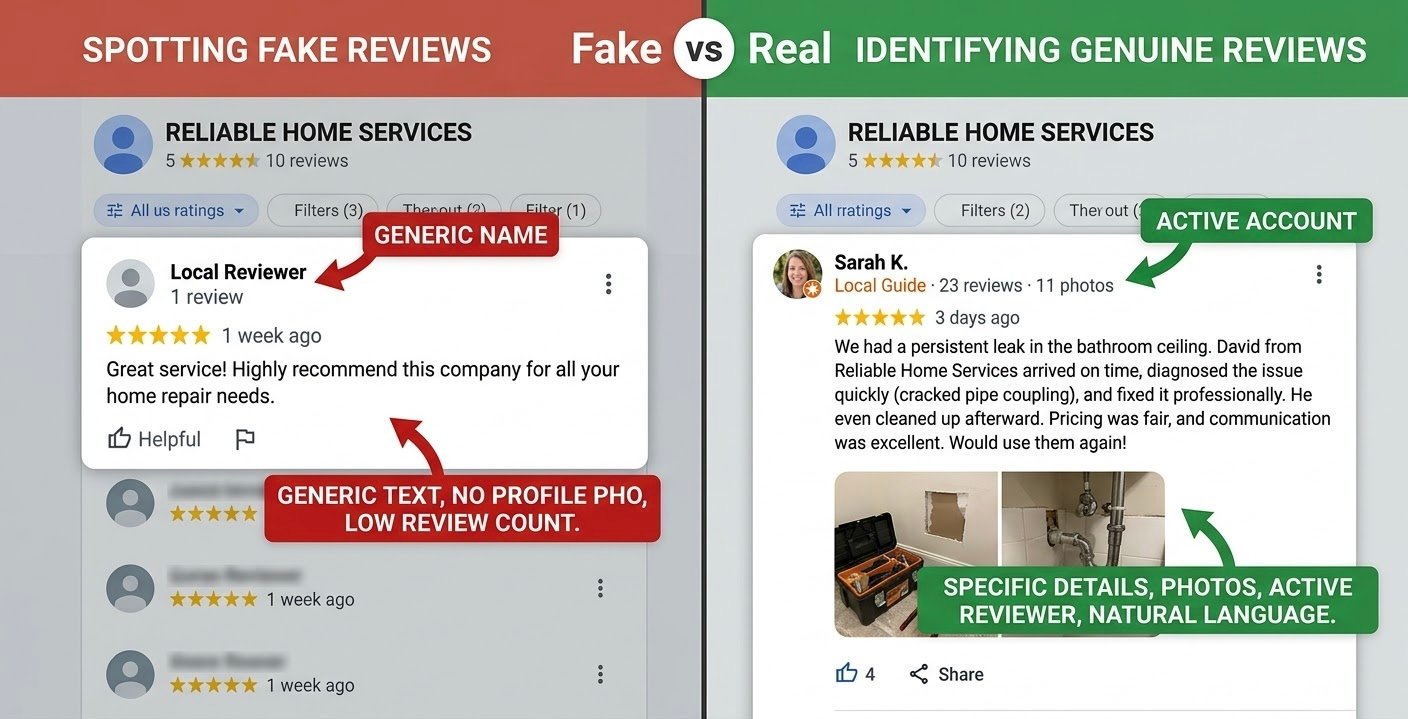
checklist on how to spot fake Google reviews before inviting anyone into your home. By
evaluating 2–3 local estimates and comparing the value of door restoration vs door replacement,
you can make the smartest, safest choice for your home’s long-term beauty and value.